The Button Budget: What Your Fastening Is Really Buying
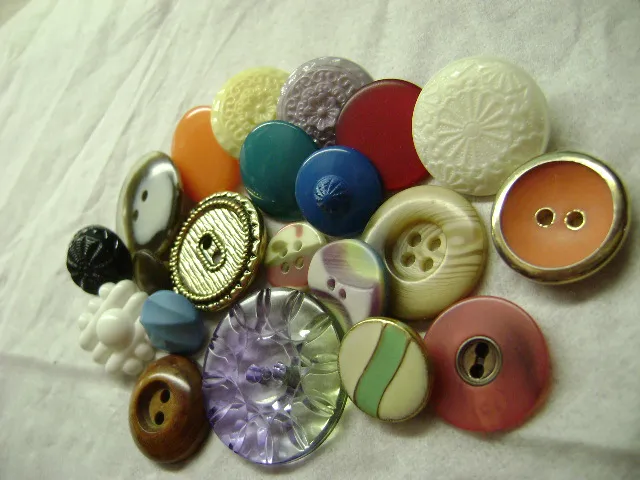
Photo: SEMichel, CC BY-SA 3.0, via Wikimedia Commons
There is a little dish by many a till that holds a dozen buttons for pennies. They are cheerful, they are handy, and they are not the enemy. Nobody needs to apologise for buying a cheap button for a toile or a child’s fancy-dress cape. But a button is not only a pretty disc with holes in it. It is a small mechanical part, and the price on the card is only the first thing you pay.
That is the conversation worth having in a workshop or a small studio. Not ‘cheap is bad’ and not ‘heritage is holy’, but: what is this fastening actually doing, and what will it ask of me later?
The price tag is the shortest part of the story
A low-cost button often carries a second invoice. It arrives in a mixed bag, so you spend an evening sorting sizes. Two have rough edges that snag the yarn. One has a shank that feels suspiciously hollow. The colour is a shade off the sample, which matters when you are making six stock items rather than one. None of that appears on the receipt, but it all takes time.
Then there is the repair bill. A 15p button that pops off a cardigan in the wash and prompts a customer email, a replacement, a trip to the post office and a small dent in your reputation has not cost 15p. It has cost an afternoon and a bit of confidence. For a small creative business, that is the real outlay.
What a bargain button can quietly cost you
The problems are rarely dramatic. They are small and repetitive:
- Inconsistent sizing. The holes do not line up with your chosen thread, or the diameter drifts between batches.
- Brittle edges. Cheap plastic can chip at the rim, leaving a sharp point that catches fabric.
- Weak shanks. A hollow or badly moulded shank can flatten under a coat’s weight.
- Dye transfer. Dark or brightly coloured buttons can bleed when washed, especially if the fabric is pale.
- No spares. A card of six is fine until you need a seventh for a sample or a repair.
- Landfill maths. Mixed-material buttons are awkward to recycle, so a failed fastening often goes straight in the bin.
None of this means every inexpensive button will let you down. Plenty are perfectly sound for light duties. The point is to match the button to the job rather than hoping a pretty bargain will behave like a workhorse.
Where cheap makes sense
There are places where a budget button is a sensible, even virtuous, choice. Toiles and test garments do not need heirloom fastenings. Children’s craft projects, temporary window displays, sample boards and hidden inside buttons are all good homes for a modest button. If a fastening will never see a washing machine, bear no load and be hidden from view, save your money and put it into the fabric instead.
It also makes sense to keep a small stash of cheap buttons for workshops and community sewing sessions. A beginner does not need a horn button to learn a four-hole stitch. Let the bargain box do its job.
Where to spend
Spend where the button is asked to work. A coat front, a bag closure, a heavy cardigan, a commission piece, a retail item that will be washed and worn repeatedly: these are load-bearing fastenings. They deserve a button with a solid rim, a proper shank, a clean finish and a bit of weight in the hand.
If you sell your makes, the button is also a trust signal. A customer may not know the difference between a moulded shank and a sewn-through button, but they will notice when one stays put through a winter and the other does not. A good fastening is quiet marketing.
How to judge value without a laboratory
You do not need specialist equipment to sort the promising from the pointless. Start with your fingertips. Does the rim feel crisp or crumbly? Are the holes smooth inside? Does the button flex under gentle pressure, or does it feel like it might snap? Look at the shank: is it deep enough for the fabric you have in mind, and is it cleanly finished? A good button should feel like it has been made on purpose.
Ask about the material. Plastic, corozo, horn, wood and metal all behave differently. Corozo and horn can be lovely for natural fibres, but they still need the right care. Metal can be strong but may tarnish. A British-made or heritage button is not automatically indestructible; it is simply more likely to have a traceable story and a better finish. Value is fitness for purpose, not a romantic label.
Before you commit to a batch, buy one extra and give it a wash test with a scrap of your fabric. Check for colour bleed, chipping and loosening. Keep a note of the batch and buy spares while they are available. Future you will be grateful.
The small-business maths
If you make to sell, build a button allowance into your pricing rather than treating fastenings as an afterthought. It is easier to justify a better button when you know it is already in the sum. Keep a few spares for repairs, record where you bought them, and be honest with customers about care. A button that survives a winter is worth more than a bargain that creates a return.
The same logic applies to your own making. A slightly dearer button on a coat you will wear for years is not extravagance; it is cost per wear in action. A cheap button on a garment that never leaves the house is not a failure either. Judge the job, then choose.
A simple button budget
Try splitting your button spending into three pots: workhorse buttons for everyday makes, feature buttons for pieces where the fastening is part of the design, and experimental buttons for samples and one-offs. Most of the money belongs in the first pot. Most of the fun belongs in the second. The third pot keeps you curious without risking a whole commission on an untried idea.
Cheap buttons have a place in every sewing room. So do good ones. The trick is not to let the price tag make the decision for you. Pick the button that can do the job, keep a spare, and enjoy the small satisfaction of a fastening that simply stays put.