Countdown in Calico: Sewing Twenty-Four Button Pockets Before December

Photo: handmade fabric advent calendar with buttoned pockets hanging on wall, via www.nczoo.org
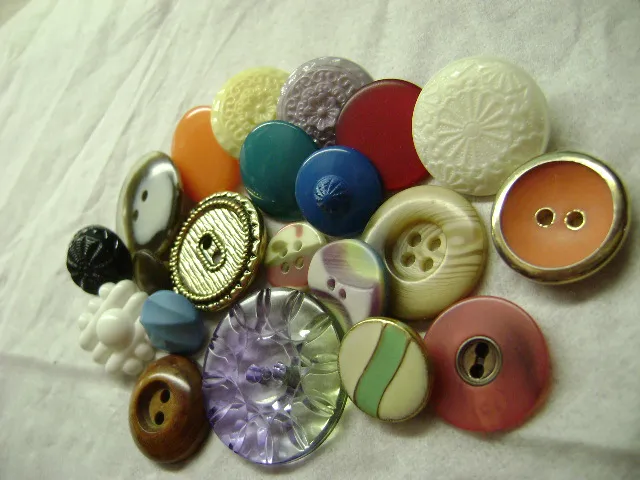
There's a Saturday at the end of November when the button box stops being an archive and starts being raw material. Ours sits on the shelf all year, quietly filling with orphans: the four spares that came with a coat, a job lot from a charity-shop tin, the ones that fell off a cardigan nobody can quite remember owning. In December they all get a job.
A fabric Advent calendar is one of the few Christmas makes that gets used every single year and doesn't need to be stored with the good china. It's cheap, forgiving, and it can be built from what's already in the cupboard — a metre of calico, a handful of scraps, a length of ribbon and twenty-four buttons that don't match and never will. That last part isn't a compromise. It's the whole charm.
Here's how we'd approach one this week, with the first of December close enough to hear.
Start with the tin, not the shop
Empty the button box onto a tray and sort by size rather than colour. You want twenty-four buttons that will take a small loop or sit flat against a pocket without wobbling — 12mm to 18mm is the sweet spot. They don't need to coordinate. A calendar made from four decades of oddments, in cream and bone and one alarming orange, looks like something that belongs in a house rather than a catalogue.
If you're short, raid the cuffs of shirts that have gone past mending, or buy a mixed bag from a haberdashery stall — but resist the urge to buy a matched set. Matching is what shop-bought calendars do.
The panel, in numbers
A finished panel of roughly 55cm wide by 85cm tall gives you four rows of six pockets with room for a header and a hanging sleeve. Nothing about those figures is sacred; scale it if your wall says otherwise, but keep the row count even or the numbering goes strange at the bottom.
What you'll need:
- Front panel and backing, both cut 57cm × 87cm (1cm seam allowance included)
- Optional wadding, 55cm × 85cm, for a bit of body
- Twenty-four pocket pieces, each cut 9cm × 16cm
- A 30cm length of dowel, or two ribbon loops if you'd rather hang it from a hook
- Buttons, perle thread, and something for the numbers
Twenty-four pockets in one evening
Each pocket is a rectangle folded in half, right sides together, stitched around three sides, corners clipped, turned and pressed. You end up with a 9cm × 8cm pocket with a clean top edge. Do them assembly-line fashion — sew all twenty-four, then turn all twenty-four, then press the lot while something decent is on the radio.
Pin the pockets to the panel in rows, allowing about 2cm between them and 4cm from the outer edges. Stitch down both sides and across the bottom of each pocket, backtacking at the top corners where the strain lives. If you want to be kind to future you, mark the grid in tailor's chalk first with a long ruler; eyeballing twenty-four positions is how pockets end up listing like a fence in a gale.
The buttons do the fastening
This is where the button box earns its place. Each pocket gets one button stitched to its front, and a small loop of cord, narrow ribbon or rouleau to hook over it. The loop holds the pocket shut and holds the treat in. It also means the calendar looks finished even when it's empty, which is more than can be said for most December crafting.
Stitch the buttons with a small shank so the loop slides underneath without straining the fabric. If a button is particularly fine — a bit of old horn, a painted glass one — put it on a pocket near the top where it can be admired rather than fought with.
Numbers, and the case for wonk
You can embroider the numbers in backstitch, stamp them with fabric ink, or cut small tags from linen and stitch one to each pocket. Whatever you choose, do it before the pockets go on the panel. Nobody has ever successfully embroidered a numeral onto an already-attached pocket without swearing.
The numbers will not be identical. Let them be. A calendar where the 7 leans left and the 19 is a bit stout reads as handmade rather than faulty, and anyone who has ever been given one knows the difference.
The tag version, for the time-poor
If December is already too close, skip the pockets entirely. Cut twenty-four tags, stitch a button to each, add a loop of string and a number, and hang them from a length of ribbon or a bit of garden twine pegged across the chimney breast. You lose the pockets and keep the ritual, and you'll have it done in an evening and a half.
Hanging it without regret
Twenty-four small parcels have weight to them. Sew a sleeve across the top and slot a dowel through it, then hang from two points rather than one, or the whole thing will sag into a smile by the 14th. If you're using ribbon loops, stitch them into the seam rather than onto the surface.
If you're making a batch to sell
This is where the project turns commercial, and it behaves well. Cut six at once, chain-piece the pockets, and buy buttons by the hundredweight from a mixed bag — a mismatched calendar is a selling point, not a flaw. Price the time honestly: three evenings per calendar is realistic for the first, two for the fifth.
A few practical notes for a stall or a shop. Keep small loose parts out of reach of under-threes, and if you're marketing it as a child's item, check the current UK toy safety requirements before you print a label. Add a care card — cold hand wash, dry flat, don't tumble the wadding. And photograph it filled, because an empty calendar looks like an unfinished project and a full one looks like Christmas.