Heritage in the Palm: Five Buttons That Reward a Closer Look
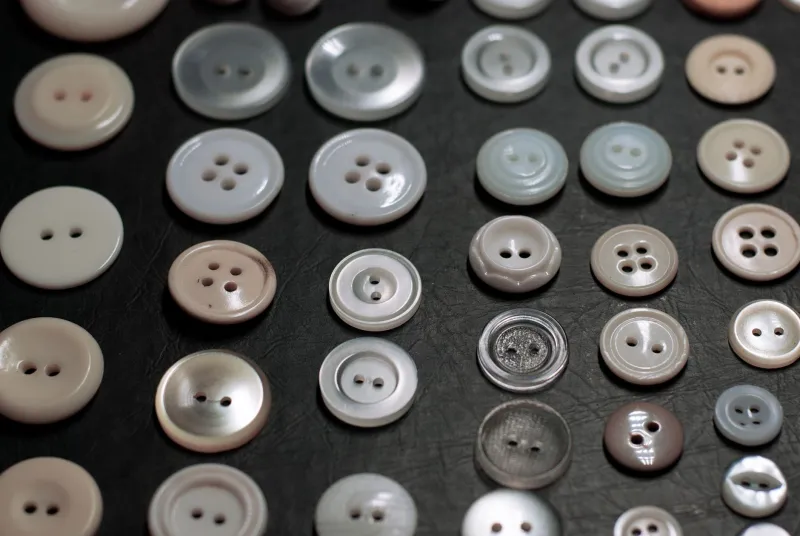
A good button tin is never just a button tin. Tip it out on a tea towel and you get a small parade of ordinary life: coat buttons, cardigan buttons, a lone brass oddity, a pearly disc that catches the light. Some of those little things have a bit more to say for themselves. They are heritage buttons, and they turn up far more often than you might think in charity-shop lots, car-boot boxes and the sewing basket that came down through the family.
The trick is to enjoy them without turning your workroom into a museum. You are a maker, not a cataloguer. So here is a practical look at five types UK crafters meet most often, with gentle notes on spotting them, cleaning them safely and making the use-or-keep call.
Dorset buttons: tiny discs with a story
Dorset buttons are the ones that look almost too neat to be handmade. They are small, usually round, with a ring at the centre and fine thread or yarn wrapped around it in a spoke-like pattern. The classic versions were made in Dorset from the seventeenth century onwards, often by outworkers, and they have a humble, beautiful sort of precision. In a mixed tin they can look like little woven wheels.
Identification is mostly about the structure: a metal or bone ring under the thread, firm wrapping and a slightly raised centre. Later versions may be simpler than the elaborate old ones, so do not dismiss a modest example. Look for even tension and a hand-worked feel rather than a moulded plastic look.
Cleaning needs care. Do not soak them. Dust with a soft brush, and if the thread is grubby, use a barely damp cloth around the edges rather than water on the wrapping. If a Dorset button is fragile, loose or coming unwound, leave it alone. Use sturdy modern examples on bags, cushions or brooches; keep fragile antique ones in a small labelled box. A single Dorset button on a handmade project can be a lovely nod to the past without asking too much of a delicate old thing.
Livery buttons: heraldry in miniature
Livery buttons are the ones with a crest, a motto or a little coat of arms on the face. They were worn on the uniforms of servants, coachmen and estate staff, and they are a common find in British vintage lots. Some are finely detailed; others are worn smooth by years of polishing. A crown, an animal, a monogram or a curious shield is often the giveaway.
Turn the button over. Backmarks can tell you a lot: a maker's name, a city, sometimes a date range. Do not expect every example to be traceable. Many were made in Birmingham and London by firms whose records are patchy, and many families had their own versions. The fun is in the looking rather than in proving a grand connection.
For cleaning, start dry. A soft brush and a microfibre cloth will lift most dust. Avoid aggressive metal polish, especially on gilt or plated buttons, because it can take off the surface and with it the detail. If you must use a little mild soap on a metal button, keep it brief and dry it thoroughly. Livery buttons can make wonderful cufflinks, brooches or focal points on a heritage-inspired cushion, but if the shank is fragile or the crest is very worn, store it as a curiosity. A livery button does not need to be rare to be worth keeping.
Horn buttons: warmth you can feel
Horn buttons have a lovely weight and a warm, slightly uneven surface. They are usually brown, black or mottled, and they feel less chilly than metal and less slick than plastic. Some have visible grain or a faint natural smell when rubbed. They were made from cattle horn, a by-product of the meat trade, and they have been used on everything from workwear to smart coats.
A quick way to tell horn from plastic is to look at the variation. Real horn rarely has a completely uniform colour, and the back may show a slightly fibrous texture. It can also be warm to the touch very quickly. Do not use the hot-pin test on a button you care about; it is not worth the damage.
Horn dislikes hot water and long soaking. Wipe with a damp cloth, dry at once, and avoid harsh detergent. A tiny amount of mineral oil on a cloth can revive a very dry horn button, but test it first and use sparingly. Horn buttons are excellent for coats, jackets and bags because they are strong and look better with a bit of wear. If a horn button has a crack running through it, use it for a decorative project rather than a hard-working fastening.
Mother-of-pearl: a little light in the hand
Mother-of-pearl buttons are the ones that seem to hold light rather than reflect it. They are made from shell, usually with a pearly sheen that shifts as you turn them. In a tin they often look creamy, greyish or faintly pink, and they feel cool and quite solid for their size. Victorian and early twentieth-century shirts and blouses were often fastened with them, and they still turn up in quantity.
Look for a natural iridescence, slight variation from button to button and a smooth, cool surface. Plastic imitations can be very good, but they often have a flatter shine. If the back shows a slightly rough or chalky texture, that is another clue. Mother-of-pearl can chip, so check the rim before you plan a hard-wearing use.
Clean with a soft damp cloth and dry immediately. Avoid acidic cleaners, bleach and long soaks, which can dull the surface. Do not tumble them in a washing machine if you can help it; that is how chips happen. Use mother-of-pearl on blouses, shirts, baby knits and delicate bags. Cracked or chipped ones can still earn their place in mosaic work or as tiny decorative details. They are also lovely sorted by size in a little glass jar, which is not a use as such, but it is a pleasure.
Uniform buttons: brass with a past
Uniform buttons cover a wide family: railway companies, police forces, military regiments, shipping lines, schools and hospitals. Many are brass or gilt, with a crown, anchor, wheel, letters or a crest. They are sturdy, often beautifully made and usually easy to spot because they look more formal than a plain coat button.
Backmarks are your friend here. A name such as a Birmingham or London maker, a regimental name or a company title can send you off on a satisfying bit of research. But do not feel you have to identify every one. A button with a worn crown and a solid shank is still a good button.
Resist the urge to bring up a bright shine. Over-polishing brass removes history and can wear away fine detail. A soft brush, a dry cloth and a little patience are usually enough. If you want to use uniform buttons on a bag or jacket, check the shank and the back for corrosion first. They can look superb on a tailored coat or a small-business display card. If they are very corroded, keep them as found and let them be old.
Use it or keep it? A gentle decision
Ask three questions. Is it strong enough for the job? Is it emotionally or historically interesting enough that losing it would be a shame? And will you actually enjoy seeing it in use? If the answer to the first is no, do not force it. If the answer to the second is yes, a little box or a labelled envelope is a perfectly good home. If the answer to the third is yes, sew it on and enjoy it.
A sensible sort-out helps. Keep a small tray for heritage buttons you want to research, a tin for everyday users and a box for fragile pieces. Label what you know, and leave space for what you do not. That way your button box stays a working pleasure rather than a guilt-inducing archive. The best heritage buttons are not the ones locked away from daylight; they are the ones you notice, handle and occasionally put to work.