Let the Repair Show: The Case for a Button You Can See Was Mended
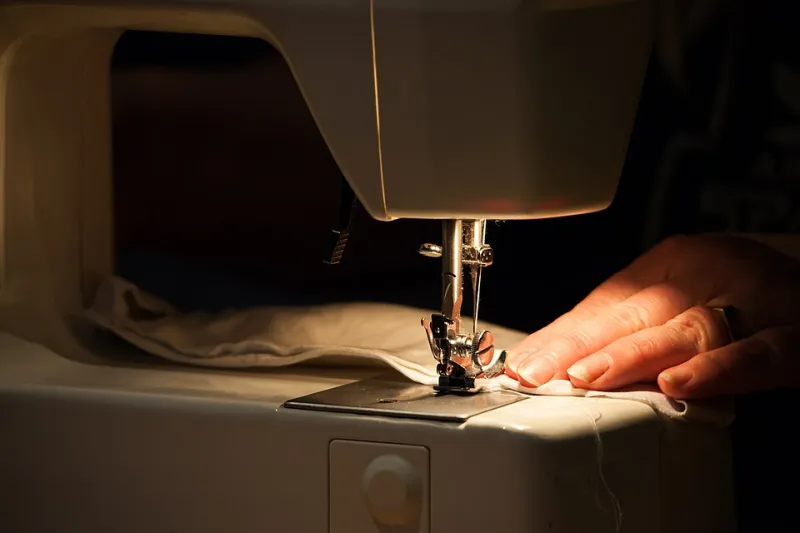
Photo: Tadeáš Bednarz, CC BY-SA 4.0, via Wikimedia Commons
There is a particular instinct that takes over when a button comes loose. You find the button, you find the thread, and you go looking for the nearest spool that matches the fabric. Not the nearest spool that matches the button — the fabric. The goal, quietly and without anyone saying it out loud, is for the repair to disappear.
I would like to make the opposite case. Not for every repair, and not as a rule for anyone else, but as an option that deserves a place in the sewing box rather than at the back of it.
The disappearing act
Invisible mending is a lovely skill and an old one. The tradition of making do and mending that runs through British household sewing is built on it — the turned collar, the darned heel, the patched elbow that nobody was meant to notice. It grew out of necessity and a certain social pressure to look as though nothing had ever needed fixing, both of which made sense in their moment.
But a button is not a hole. A button is already visible. It is a deliberate, decorative object that sits on the outside of a garment and asks to be looked at. Hiding the repair on something that is meant to be seen has always struck me as an odd bit of logic, a little like painting over a picture frame.
What visible mending actually means for a fastening
Visible mending, as it is practised now by the growing number of repair-minded sewists across the UK, is not about making a repair ugly or obvious for its own sake. It is about accepting that a garment has a life, and letting that life show in the stitching. Repair cafés, mending circles and the quiet resurgence of hand-sewing groups have made this a shared language rather than a personal eccentricity.
Applied to buttons, it looks like this: a shirt with one button reattached in a warm mustard thread. A coat with its top button sewn in a bold cross rather than a quiet parallel. A cardigan where the replacement button is deliberately, cheerfully different from its neighbours. None of these read as damage. They read as attention.
Four ways to reinforce without hiding
The crow's foot. Instead of two parallel stitches across a four-hole button, work a small fan or a cross. The shape is stronger than a straight bar, spreads the strain across the button, and looks intentional from a metre away. Use a doubled thread and wax it first; the wax stops it fraying and helps it bed down.
The backing button. Sew a smaller button on the inside of the garment, directly behind the visible one, and stitch through both. This is the standard trick for heavy coat buttons, and it turns a two-layer anchor into a four-layer one. Choose a backing button in a contrasting colour — nobody sees it but you, and it will make you smile when you put the coat on.
The stacked pair. Two buttons, one small and one large, sewn one on top of the other with a wrapped shank between them. This builds depth without shortening the thread, and it gives a plain shirt front a bit of personality.
The stitched frame. For flat buttons on soft fabric, work a small square or a row of running stitches around the button in a contrasting thread, then anchor the button through the centre. The frame takes the strain that would otherwise pull at the buttonhole and it makes a feature of the area rather than disguising it.
Choosing a thread that says something
Matching thread is not the only respectable choice. A single strand of embroidery floss in a colour drawn from elsewhere on the garment — the stripe in a shirt, the lining of a jacket, the colour of the buttons on a favourite dress — ties the repair to the piece without pretending it was always there.
There is one rule worth keeping: match the weight, not the colour. A repair thread should be as strong as the original, or stronger. Perle cotton and linen thread both hold beautifully and both look deliberate. Standard polyester sewing thread is fine, but use a longer length and double it, because a button repair fails at the thread far more often than at the fabric.
The practical case, not just the sentimental one
A visible repair is often a better repair. When you can see the stitching, you can see whether it is holding. You can check it in the mirror, notice the first frayed strand, and deal with it before the button goes missing entirely. Hidden repairs hide their failures too, and a button that fails silently in a car park is a button you will not find again.
There is also the matter of time. Matching thread takes minutes of searching. Contrasting thread is right there. Over a year of small repairs, that adds up to a surprising amount of your evening back.
Where to begin
Pick one garment and one button. Nothing precious — a shirt, a cardigan, a bag strap. Rethread the button in a colour you actually like, work a cross instead of a bar, and wear it out of the house. See how it feels to have a repair that announces itself politely rather than apologising for existing.
Most people will not comment. The ones who do will be the ones worth knowing, and they will tell you about the coat they mended themselves, and the button they inherited from a grandparent, and the trick they use to keep a shank tidy. That conversation is the whole point. A button sewn in plain thread ends the story. A button sewn in bright thread starts one.