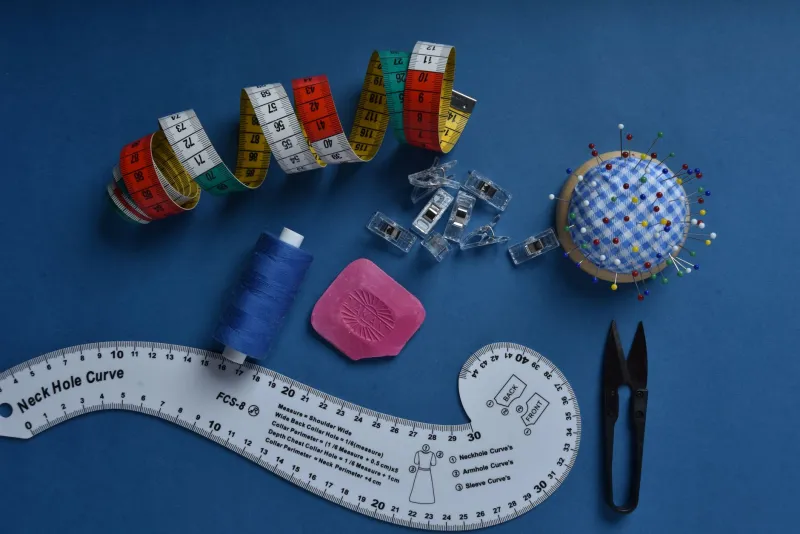
The Tiny Tin That Saves the Day: A Pocket Repair Kit for Life Out and About
Photo: Alf van Beem, CC0, via Wikimedia Commons
British days out have a talent for testing a wardrobe. The sky is bright when you leave the house, the train is warm, the park is muddy, and somewhere between the wedding car and the buffet table a button quietly surrenders. A strap slips. A coat hem catches. A neat little press-stud gives up in the changing-room queue. None of these are disasters, but they are the sort of small snags that can make a good day feel ragged.
That is where a pocket repair kit comes in. Not a full sewing box, not a travelling haberdashery, just a small, well-chosen tin that lives in your bag and knows its job. At ButtonBox Supplies we like to think of it as a little tin of calm: the crafty equivalent of a spare hairband or a folded tote bag.
Start with the tin, not the list
Choose a tin before you choose the contents. A shallow hinged tin about the size of a deck of cards is ideal, especially one with a secure lid and rounded corners that will not snag the lining of your bag. An old sweet tin works beautifully, as does a small pencil case or a zip pouch. The important thing is that it closes firmly, opens easily and feels pleasant to carry. If it rattles, cut a piece of felt to line the base. If it is slippery, add an elastic band around the outside. Label it if you like; a strip of masking tape and a biro is enough.
The six essentials that earn their place
A good kit is built around a short list. These are the things we reach for most often.
Spare buttons. Pop in one or two that match your most-worn coat or jacket, plus a plain navy or dark brown button that can pass unnoticed in an emergency. Keep them in a tiny envelope or a small press-seal bag so they do not scratch everything else.
Thread. One or two small cards wound with strong polyester thread in the colours you actually wear. Black, navy, grey and a warm neutral will cover most days out. Wrap the thread around a matchstick or a small piece of card and tuck the loose end under the last turn.
Needles. Two is plenty: a fine needle for shirt buttons and a sturdier one for coat buttons. Keep them in a small felt sheath or a folded piece of card. A needle book made from a scrap of wool felt is a lovely five-minute make.
A safety pin. The quiet hero of the kit. It can hold a broken strap, replace a lost button temporarily, secure a zip pull or rescue a hem until you get home.
Tiny scissors. Folding embroidery scissors or small snips are best. They should be sharp enough to cut thread, not so precious that you are afraid to use them. Some kits use a thread cutter disc instead, which is lighter but less useful for trimming a loose hem.
A press-stud. A small sew-on press-stud or a hook-and-eye can save a gaping blouse, a bag closure or a child's costume. Choose a metal press-stud if you can; it is stronger and less likely to bend.
You might also add a thimble if you sew often, or a tiny needle threader if your eyesight and the train lighting are not friends. But start with the six and see how you go.
Tailor the tin to the life it lives in
The same kit does not suit every bag. A work tote might need a black button, grey thread and a safety pin for the commute. A wedding-guest clutch might carry a single pearl button, ivory thread and a tiny press-stud for the inevitable strap crisis. A parent's changing bag could use a bright button for a child's cardigan and a slightly larger safety pin for a torn costume. A coat pocket kit can be even smaller: one button, one needle, a length of thread and a safety pin tucked into an old matchbox.
The trick is to build for the life you actually lead, not the life you imagine. If you never wear white, leave the white thread at home. If your favourite coat has a distinctive button, keep a spare of that one and nothing else.
The overpacking trap
It is easy to turn a pocket kit into a portable sewing shop. Resist. A kit that is too full is heavy, fiddly and rarely used. Keep the contents under review. Once a month, open the tin, check the thread is not tangled, make sure the needles are still in their sheath and remove anything you have not needed. A kit should feel like a helpful friend, not a test of upper-body strength.
A five-minute assembly ritual
Gather your tin, your six essentials and a small piece of card. Write a tiny note with the basics: thread the needle, knot the end, sew through the button holes, make a shank if the button needs one, finish under the button. You will not need the note for long, but it is reassuring in a hurry. Tuck everything in, close the lid and put the kit in the bag you use most. Then make a second, smaller one for your coat pocket. They take minutes to assemble and can save an entire day.
A pocket repair kit will not make British weather behave. It will not stop a button from loosening or a strap from snapping. But it will give you a small, practical answer when the day asks for one. And there is something quietly satisfying about being the person who can say, 'Hold on, I have a button'.