Seeds, Not Shells: Getting Acquainted with Corozo and Tagua Buttons
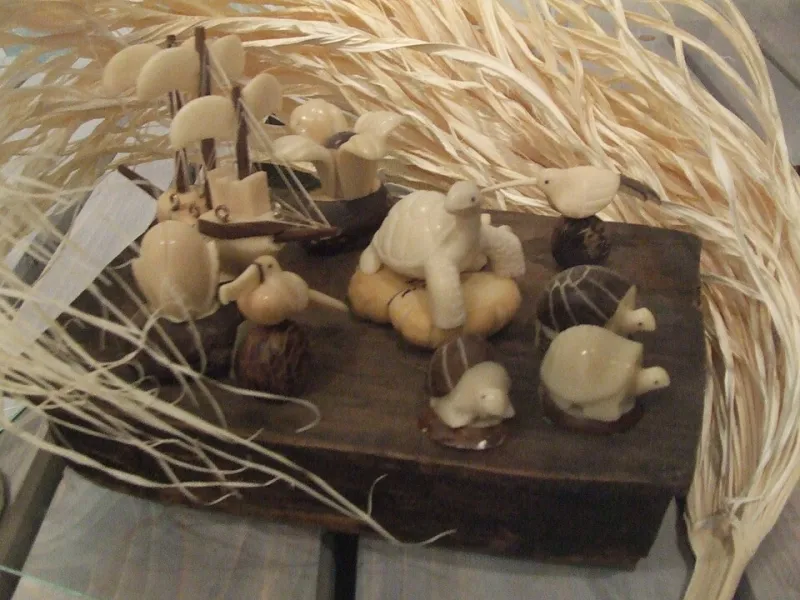
Photo: Dariusz.Biegacz, CC BY-SA 4.0, via Wikimedia Commons
There is a particular sort of button that turns up on good knitwear and handmade cardigans: creamy, lightly grained, cool to the touch, with the quiet weight of something that was grown rather than manufactured. It is usually corozo. Sometimes it is tagua. In the trade the two names get used almost interchangeably, which is either charmingly relaxed or mildly infuriating, depending on how much you enjoy a labelling argument. Either way, it is a plant-based button with a genuinely good story, and it deserves a place in your mental button drawer.
The nut behind the name
Corozo buttons are cut from the nuts of the tagua palm, a spiny, slow-growing tree native to the humid forests of Ecuador, Colombia and Panama. The nuts are harvested after they fall, dried for weeks until the flesh inside hardens, then sliced, tumbled and polished. The result is often called vegetable ivory, and the nickname is fair: dense, smooth, capable of taking a fine engraved line, it behaves a little like bone or horn without any animal involved.
This is not a new idea. Vegetable ivory was big business in the nineteenth century for dice, dominoes, umbrella handles and, of course, buttons. It faded when petroleum plastics arrived, then quietly came back as mills and brands looked for something that could be composted rather than buried. Today you will find corozo on everything from British-made knitwear to small-batch children's clothes, usually with a little tag claiming 'natural corozo' as though it might otherwise be synthetic corozo, which it could not be.
Strictly speaking, some sources separate corozo and tagua by palm species. In the button world, the words are often used for the same material. If a label says either, you are almost certainly holding a palm-nut button.
How to spot one in the wild
In a shop, look for a surface that is opaque but not glassy. Corozo has a faint, close grain, like a very polite piece of ivory, and may show tiny darker flecks or a soft mottling. Plastic buttons tend to be uniform to the point of boredom; corozo has small irregularities. It feels cooler and denser than most resin, and it does not have the seam line you often see on moulded plastic.
On a label, look for 'corozo', 'tagua', 'vegetable ivory' or 'plant-based'. Beware vague wording: 'natural look' means nothing at all.
In a charity-shop bargain bin, check the rim and the holes. Corozo is tough but it can dry out and crack if it has spent years near a radiator. Hairline splits radiating from a hole, or a chipped edge, are reasons to leave it be unless you want it for a mosaic or a very small craft experiment. A faint nutty smell when drilled is normal, by the way. It is not a sign of decay; it is a sign of being a seed.
What happens in the washing machine
This is the practical bit. Corozo and tagua are not delicate little snowflakes, but they are not indestructible either. A cool or warm wash — 30°C is sensible — is generally fine. What they dislike is prolonged soaking, chlorine bleach and the inside of a hot tumble dryer. Heat and dryness can encourage fine cracks, especially in older buttons that have already had a hard life.
Turn knitwear inside out, fasten the buttons, and wash at a moderate temperature. If the buttons are dyed a deep colour, test one with a damp white cloth first; plant-based buttons take dye beautifully, which also means a poor dye job can share. Dry the garment flat rather than hanging it by the button band, and skip the tumble dryer if you can. A little caution now saves a repair later.
One more thing: because corozo is denser than plastic, it is heavier. On fine jersey, that weight can pull at a buttonhole. Use a proper shank — a small gap of thread between button and fabric — so the button sits proud and the cloth is not dragged.
Drilling, dyeing and stitching
If you buy loose corozo blanks or want to reuse an odd shape, drilling is straightforward with a little patience. Clamp the button firmly on a scrap of softwood, use a sharp high-speed-steel bit and run the drill slowly. Clear the swarf often. For a really tidy hole, drill halfway from each side to avoid breakout at the exit. Keep holes at least 3mm from the edge; palm nut is dense, but it can split if you crowd it.
Dyeing is where these buttons become fun. Cold-water fibre-reactive dyes work, as do many natural dyes — onion skin for a warm honey tone, walnut husk for brown, madder for a soft brick red. Use a gentle hand-hot bath rather than a rolling boil, stir patiently and rinse thoroughly. Test on a spare button first. Corozo takes colour deeply, so a weak bath is often enough.
For stitching, choose a good polyester or polyester-cotton thread. A two-hole button wants a neat parallel bar on the reverse; a four-hole can take a cross or a square. Finish with a couple of backstitches and a tiny drop of fray check if the thread is slippery. Do not pull the button tight against the fabric. Give it room to breathe.
A small project: the seed-row bookmark
Gather five odd plant-based buttons, a strip of wool felt about 5cm by 18cm, embroidery floss and a 15cm length of ribbon. Fold the ribbon in half to make a loop and stitch it to one short end of the felt. Arrange the buttons in a row down the strip, spacing them evenly. Stitch each one through the felt with a shank, using a contrasting thread. Blanket-stitch around the edge of the felt to neaten it, then press gently under a cloth. You now have a bookmark with a little row of seeds down its spine — useful, cheerful and a fine way to use up the singles that never found a partner.
Keeping a small stash
Store corozo and tagua buttons dry, away from direct sun and radiators, in a tin or a cotton bag. Do not seal them in damp plastic. Every so often, give them a rub with a dry cloth; they will come up softly polished. Buy from named sources where you can, and ask questions. A good plant-based button is not just a pretty fastening. It is a seed that has been given a second career, and it will serve you well if you treat it like one.