A Single Button with Attitude: Designing Mismatch on Purpose

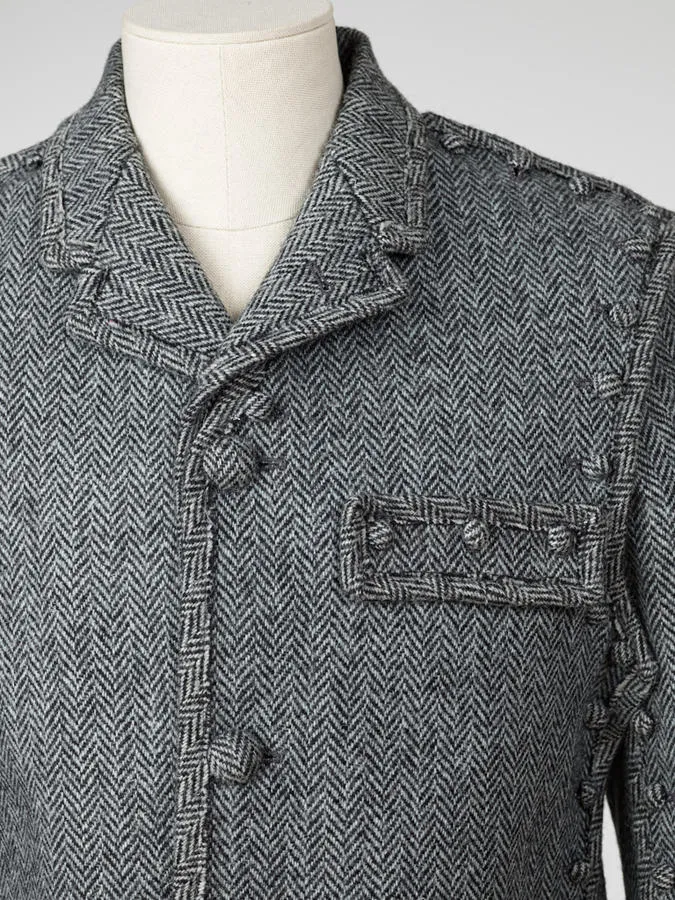
Photo: Giles Laurent, CC BY-SA 4.0, via Wikimedia Commons
There is a certain kind of button that refuses to blend in. It sits on a cuff or a placket, slightly too big, a different colour, maybe a little scratched, and it makes the whole piece look more considered rather than less. That is the odd button at its best: not a stopgap, but a decision.
Mismatch has a bad reputation in sewing. We are taught to buy a card of six, to match the thread, to replace the whole set. Sensible advice, most of the time. But there is another approach, one that treats a single different button as punctuation. A full stop. A wink. A small, useful piece of character.
The trick is making it look deliberate from three paces away. An odd button that reads as accidental usually has one of two problems: it is too timid to be noticed, or it is competing with too much else. A deliberate odd button, by contrast, has a job. It might mark a closure, draw the eye to a neckline, or simply give a plain garment a reason to be looked at twice.
First, decide what the button is doing
Before you raid the tin, ask what role the button will play. There are three reliable ones.
The focal button is the star. It might be the only fastening on a bag, a cape or a simple clutch. In that case, go bigger and bolder than feels entirely sensible. A plain wool clutch with one large horn button and a fabric loop needs nothing else.
The signature button is a quiet marker. It sits at the top of a cardigan, the cuff of a sleeve, or the corner of a pocket flap. It does not need to be enormous, but it should be different enough to notice: a vintage glass button among plain plastic ones, or a warm brass tone against navy wool.
The echo button repeats a colour or texture elsewhere. If your lining is rust-coloured, a rusty-red button at the neckline ties the whole piece together. If you have used a speckled yarn, a speckled button can pick up the flecks without shouting.
What you are avoiding is the button that has no relationship to anything. Odd is good. Random is harder to carry off.
Scale, colour, material: a simple sorting test
Lay your candidate buttons on the garment in daylight. Not under a warm kitchen bulb, not on the carpet, but by a window. Step back. Take a photo. The camera is honest in a way that a mirror sometimes is not.
Scale is the first thing to judge. A single large button can carry a very simple shape: a plain tote, a boxy jacket, a wool collar. A single small button needs to be placed where it will actually be seen, such as a cuff or a narrow placket. Putting a tiny jewel-like button in the middle of a wide expanse of fabric can look lost rather than subtle.
Colour is next. You have two good options: match a colour that already exists somewhere in the make, or choose a clean contrast. A cream button on a cream jumper can look like a mistake if the tones are slightly off. A deep green button on a cream jumper looks like a choice. If in doubt, pick the button that makes the fabric look more expensive.
Material matters more than many makers expect. Horn and corozo sit happily with wool and linen. Shell works beautifully on cotton blouses and summer dresses. Metal reads well on denim, canvas and heavier knits. Glass can be glorious on a plain cardigan, but it can also fight with a busy print. Texture can be the mismatch rather than colour: a smooth button on a nubbly fabric, or a rough, handmade ceramic button on a smooth one.
Placement: where a lone button earns its keep
A standalone button needs a reason to be where it is. Good spots include the top of a cardigan, the cuff of a sleeve, the waistband of a skirt, the flap of a pocket, or the back neck of a simple dress. These are places where the eye naturally pauses.
Be careful with load-bearing closures. One beautiful button holding a heavy coat closed needs to be strong, well anchored and sensibly sized. A single odd button on a lightweight clutch or an apron tie is a design choice. A single odd button on a winter coat is a structural decision. Both can work, but they need different buttons.
Also think about the buttonhole or loop. An oversized button needs a generous loop or a properly sized hole. A delicate vintage button may need a smaller opening and a gentler approach. If you are swapping only one button on an existing garment, check that the existing hole will hold it securely without stretching.
Sourcing the singleton in the UK
Buying one button is not always easy, but it is one of the pleasures of a well-stocked sewing box. Start locally. Charity shops often have jars of buttons near the till; ask politely whether you can buy a single one rather than the whole jar. Local haberdasheries and fabric shops frequently keep an oddments basket. Market stalls and antique centres can be goldmines, especially for older glass and metal buttons.
Button fairs and collector meets are worth a day out. Take a fabric swatch, a tape measure and a note of the size you need in both millimetres and ligne. If you are buying online, look for destash lots and small independent sellers who list single buttons. Postage can make a one-button order expensive, so combine it with threads, ribbons or a length of trim you will actually use. Scrap stores and craft reuse shops are also excellent for odd buttons with a bit of history.
One practical tip: if you find a button you love but it is slightly too large for the hole, do not force it. Make a new loop, adjust the buttonhole, or use it somewhere else. The button should fit the make, not the other way round.
Three small projects where one button does the talking
The half-hour envelope clutch
Make a simple envelope clutch from a charity-shop wool skirt or a piece of heavy cotton. Fold and stitch the sides, press it well, and finish the flap with a single oversized horn button and a rouleau loop. Keep the rest of the clutch entirely plain. The button is the decoration, the closure and the personality.
The top-button cardigan swap
Take a plain cardigan and replace only the top button with a vintage glass or metal one. Keep the original button in the inside seam as a spare. This works best when the cardigan is a solid colour and the new button repeats a tone from your wardrobe. It is a five-minute change that makes a high-street knit feel more like yours.
The tie-back apron with one bold side closure
Sew a simple waist apron with a wide tie, then bring one side around to the front and close it with a single large button and a fabric loop. Choose a button that contrasts with the apron fabric but matches your kitchen or workspace. It is practical, washable and just unusual enough to feel custom.
A mismatched button is not a compromise if you choose it with intent. It is a small act of design: one fastening that says someone thought about this. And in a world of matching sets and neat little cards, that is rather lovely.