Treasure by the Jam Jar: A Sensible Guide to Second-Hand Button Buys
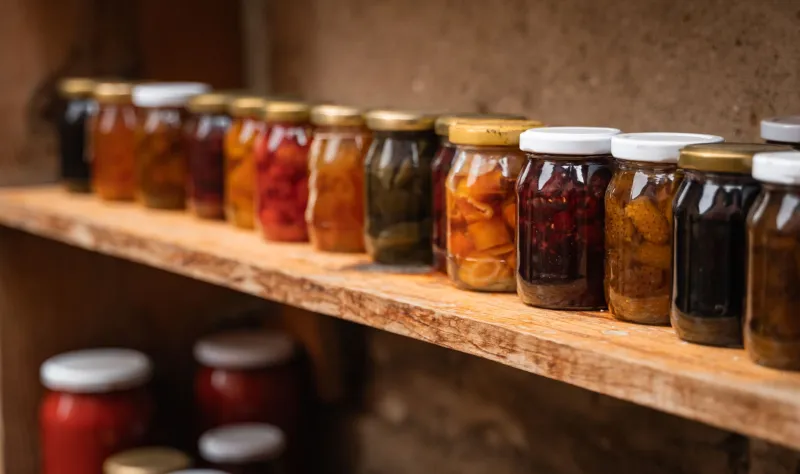
There is a particular sort of optimism in picking up an unlabelled jam jar of buttons. It rattles, it glints, and for a moment it could contain anything: a set of six little horn buttons, a hoard of pearly shirt buttons, or forty identical grey trouser buttons and a dead spider. Charity shops, car-boot sales and flea markets are full of these little parcels of possibility. The trick is to enjoy the rummage without bringing home a bag of regret.
Start with the container, not the contents
A pretty jar is not the same as a good buy. Before you fall for the vessel, check that you can actually inspect what is inside. If the bag is stapled shut or the tin is taped up, ask whether it can be opened. Charity-shop volunteers are usually happy to help; car-boot sellers may say no, which is fair enough. In that case, treat it as a lucky dip and price it accordingly. A sealed mystery bag at 50p is a bit of fun. A sealed mystery bag at £8 is a gamble with your sewing budget.
Also look at how the buttons have been stored. Damp tins, rusty tins and bags with a suspicious bloom of mould are best left alone. Buttons are hard-wearing, but they are not indestructible, and a musty haul can take weeks to air out.
The five-second flick-through
Once you can get your hands in, give the buttons a quick turnover. You are not cataloguing them; you are looking for reasons to say no.
Check the fronts for cracks, chips and missing stones. Turn them over and look at the shanks, the little loop or bridge on the back. A broken shank makes a button much less useful, unless you are buying it purely as a decorative oddment. Press the shank gently if you can. Brittle old plastic can snap with very little encouragement.
Look for corrosion on metal buttons, especially around the shank. A little surface dullness is one thing; flaky rust that stains your fingers is another. Check for sticky tape residue, ink marks and old thread that has been sewn in so tightly it has cut into the holes. And have a quick count. If you need six buttons for a cardigan, a bag with four good ones is not a bargain, however charming the others are.
Materials you are likely to meet
Most second-hand button bags are a mix of ordinary plastic, metal, glass and mystery materials. That is part of the pleasure, but it helps to know roughly what you are handling.
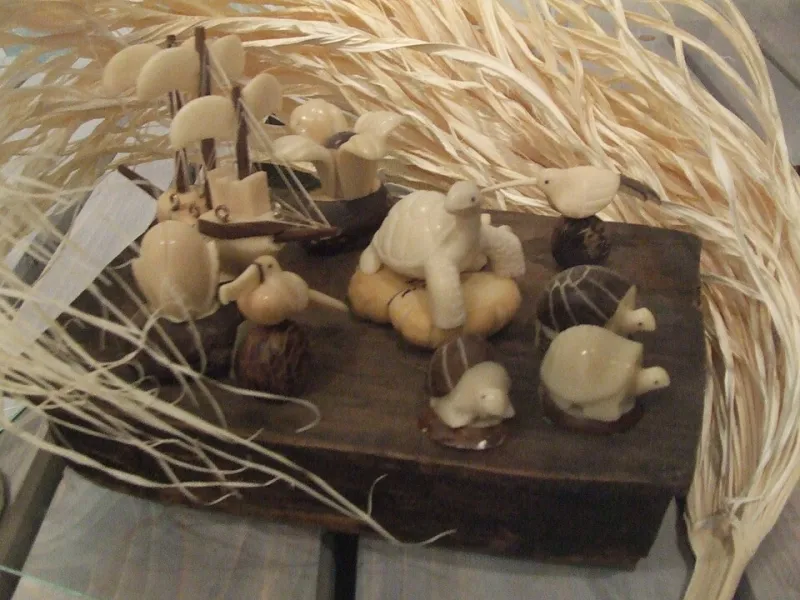
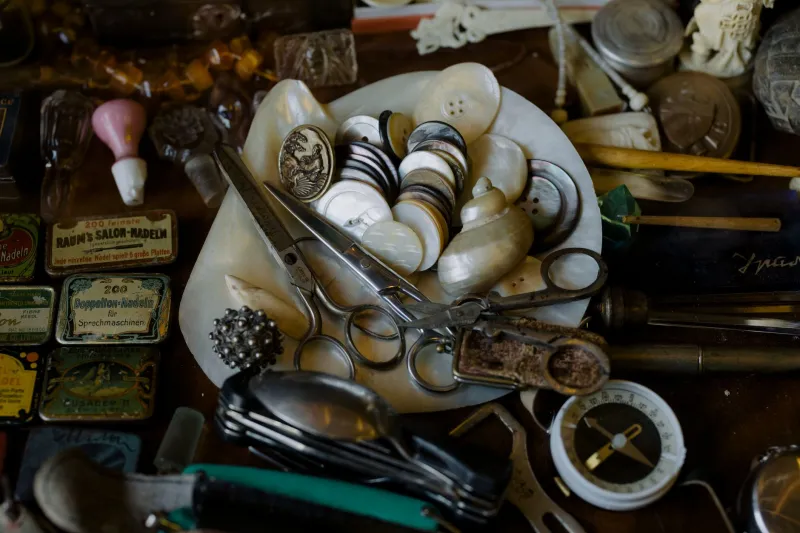
Plastic buttons are common and often perfectly useful. Older plastics may be casein, which was made from milk protein, or celluloid, which can have a faint camphor smell. Glass buttons feel cold and often have a bright, hard shine. Metal buttons may be plain, embossed or painted, and they are prone to rust if they have been stored badly. Shell buttons have a soft iridescence and can be fragile; horn and bone buttons feel warmer and often show subtle grain. Corozo and tagua, sometimes called plant ivory, turn up in vintage and modern bags alike.
The word vintage does not automatically mean valuable. A bag of 1970s grey plastic shirt buttons is still a bag of grey plastic shirt buttons. Buy them because they are useful or because you like them, not because the label says vintage.
When the price is right
Charity-shop pricing varies enormously. A jam jar at £3 to £5 can be excellent value if it contains half a dozen buttons you will genuinely use. A £1 bag of oddments is a harmless treat. Be more cautious when a small card of ordinary buttons is priced like treasure. Compare it, mentally, with what you would pay for new buttons in a haberdashery. You are allowed to put it back on the shelf.
At car-boot sales, polite haggling is part of the ritual. At a charity shop, just pay the asking price; the money is going somewhere useful. Either way, set yourself a limit before you start. It is easy to come home with three bags of buttons and no clear plan for any of them.
Quiet checks that save trouble later
Give the bag a sniff. Smoke, damp and heavy mothball smells can linger. Look out for sticky residue on the surface of buttons, which may be old tape or a degraded coating. If you are buying buttons for a baby garment or something that will be washed often, favour smooth, sturdy, washable buttons over delicate painted or shell ones.
If you are sensitive to nickel or other metals, be careful with unknown metal fastenings. And if a button has a sharp edge or a rough shank, leave it for someone who makes jewellery or sculpture.
What to leave behind
Leave the bag that is mostly broken shanks and rusty snaps. Leave the card of fancy buttons with two missing stones if you cannot replace them. Leave the huge job lot of tiny doll-sized buttons if you do not make doll clothes or miniature crafts. And leave anything that smells so strongly you would not want it in your sewing box.
This is not fussiness. A useful stash is one you can actually use. A bargain that sits in a cupboard for a decade is just clutter with a nice story attached.
A home for the oddments
Once you are home, sort the haul into three piles: keep, repair and rehome. Wash washable buttons gently in warm soapy water, rinse well and dry completely on a towel. Do not soak horn, bone, shell or painted buttons; wipe them instead. Sort by colour and size into small jars or compartment boxes so you can see what you have.
The oddments can become button cards for gifts, simple jewellery, cushion embellishments, notebook closures or extra reinforcement on a tote bag. Lone buttons make excellent replacements for lost cardigan buttons if you keep a small repair tin. Anything genuinely unusable can go to a local craft group, a school art cupboard or a textile recycling scheme.
The best finds are often ordinary
It is easy to chase the dramatic find: a tin of Victorian glass, a card of pristine Bakelite, a set of regimental buttons. Those days happen, but they are not the everyday pleasure of the hunt. The everyday pleasure is a bag of six matching horn buttons for 50p, just right for a winter coat. It is a handful of small pearly buttons that will finish a blouse. It is the quiet satisfaction of putting a useful thing back into circulation.
So take a small bag, a little cash and a patient eye. Open the tin, turn the buttons over, count the good ones and pay a fair price. Then take your treasure home by the jam jar and put it to work.